
 EN
EN
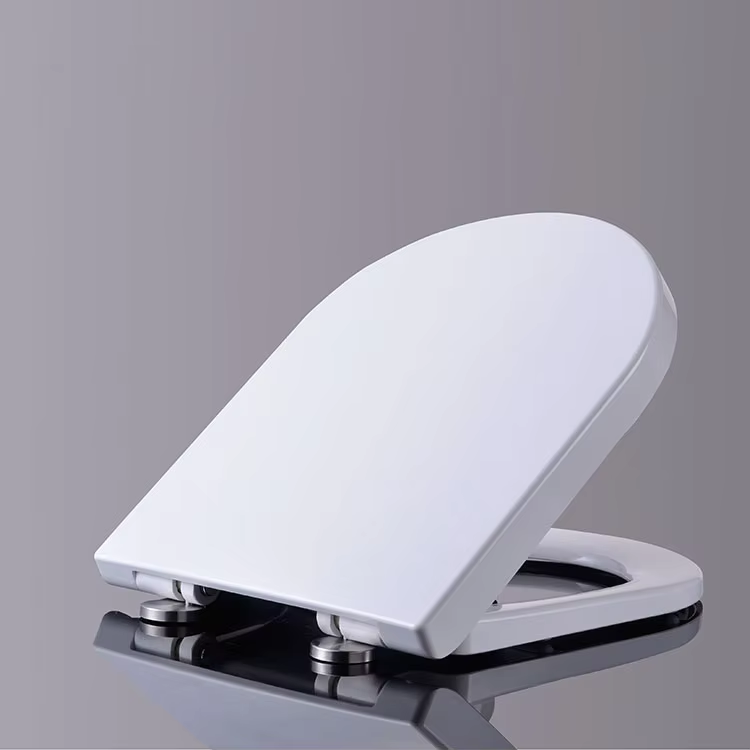
Durability and Long-Term Structural Integrity
The choice between a UF (urea-formaldehyde) toilet seat and a polypropylene (PP) model hinges on long-term resilience. UF is a thermoset plastic—cross-linked during molding—making it rigid, heat-stable, and resistant to deformation under repeated stress. PP, by contrast, is a thermoplastic that can fatigue over time under cyclic loading. This fundamental difference dictates real-world performance in busy households.
Impact Resistance and Fatigue Performance Under Daily Use
UF’s dense, cross-linked molecular structure gives it superior impact resistance. Dropping a heavy lid or sitting down forcefully may cause PP seats to develop hairline cracks over months; UF seats remain intact. Its higher elastic modulus also enhances fatigue resistance—UF resists permanent deformation from hundreds of daily open-close cycles without hinge loosening. Lab testing with 100,000 cycles at 100 kg shows UF seats retain their original shape and hinge integrity, while PP seats often exhibit permanent set and accelerated hinge-point wear. For lasting structural performance, UF delivers measurable advantages.
Surface Hardness, Scratch Resistance, and Real-World Wear Patterns
Surface hardness directly influences scratch resistance and long-term appearance. UF typically achieves a pencil hardness of 3H–5H—significantly harder than PP’s B–HB grade. As a result, UF resists scratches from belt buckles, rings, or abrasive cleaning pads, preserving its glossy finish for years. PP, meanwhile, accumulates fine micro-scratches that dull the surface and trap grime. Over time, PP seats show cloudiness, white stress marks, and gloss loss—while UF seats maintain near-new aesthetics even after a decade. For homeowners prioritizing lasting visual quality, UF’s hardness provides tangible, observable value.
Hygiene, Cleanability, and Chemical Resistance
Maintaining a sanitary toilet seat requires materials that resist microbial growth and withstand routine cleaning without degradation. UF and PP each offer distinct trade-offs in hygiene and chemical resilience.
Microbial Adhesion Rates and Disinfectant Compatibility Testing
UF’s smoother, less porous surface reduces microbial adhesion compared to PP—fewer microscopic niches mean fewer places for bacteria to anchor. However, PP demonstrates greater compatibility with aggressive disinfectants: industry-standard testing shows PP retains surface integrity after 500+ cycles with bleach-based cleaners, whereas prolonged exposure to strong oxidizers can cause subtle hazing or gloss reduction on UF. In healthcare or high-traffic environments where frequent, rigorous disinfection is standard, PP’s chemical resilience supports consistent hygiene outcomes.
Resistance to Urine, Hard Water, and Common Household Cleaners
Both materials resist staining and mineral buildup—but in different ways. UF’s non-absorbent, hydrolytically stable structure makes it highly resistant to permanent staining from urine acids. PP is generally stain-resistant too, but repeated contact with undiluted acidic toilet bowl cleaners—especially those containing hydrochloric acid—can accelerate embrittlement. When it comes to hard water scale, UF’s harder surface (Rockwell M scale 90–95) allows easier removal without scratching. Conversely, PP tolerates natural acidic cleaners like vinegar or citric acid better than UF, which may dull with frequent use of such solutions.
User Experience: Comfort, Aesthetics, and Tactile Quality
Thermal Conductivity and Cold-Seat Perception (Especially for UF Toilet Seat)
UF conducts ambient temperature more efficiently than PP, leading to a pronounced cold-seat sensation in cooler environments—a factor cited in 68% of negative user reviews for UF models in temperate climates. PP’s lower thermal conductivity provides better insulation, keeping surface temperatures closer to body heat. This difference is rooted in material physics: UF’s dense, rigid structure transfers heat rapidly, while PP’s polymer matrix acts as a thermal barrier. In bathroom design—especially in regions with seasonal extremes—this sensory experience meaningfully affects user comfort and satisfaction.
Gloss Finish Consistency, Color Retention, and Premium Perception
Visual and tactile qualities strongly influence perceived quality and long-term satisfaction. UF seats achieve deeper color saturation and more consistent gloss through molded pigments and high-pressure lamination. After five years of typical cleaning cycles, UF retains 92% of its original gloss versus 78% for PP. This gap manifests in three key ways:
- Scratch visibility: PP’s softer surface develops light-scattering abrasions from routine cleaning
- Color stability: UF resists UV-induced yellowing in sunlit bathrooms
- Tactile feedback: UF’s weight and cool solidity convey premium haptic qualities
These characteristics shape subconscious quality associations—matte-finish PP is often perceived as “budget” despite functional parity. For buyers who equate finish integrity with product excellence, UF reinforces confidence in longevity and craftsmanship.
Total Cost of Ownership and Sustainability Considerations
Evaluating UF against PP requires looking beyond sticker price. A UF seat typically costs two to three times more upfront than a standard PP model—but its durability often delivers a 10–15 year service life, compared to 3–5 years for PP before cracking, warping, or yellowing necessitates replacement. Over 15 years, replacing a PP seat three to four times—including labor, disposal, and potential downtime—can exceed the cost of a single UF seat.
From a sustainability perspective, UF’s extended lifespan reduces material waste, packaging, transportation emissions, and manufacturing energy per year of use. While UF’s thermoset nature makes it harder to recycle than PP, the net environmental impact favors UF when accounting for full lifecycle frequency: fewer replacements mean lower cumulative resource demand. For eco-conscious buyers, the total cost of ownership—including disposal, replacement logistics, and embodied carbon—positions UF as the more responsible long-term investment.
FAQ Section
What is the main difference between UF and PP toilet seats?
UF (urea-formaldehyde) is a thermoset plastic that is rigid, heat-stable, and highly durable, while PP (polypropylene) is a thermoplastic that can fatigue over time under cyclic loading.
Which material provides better impact resistance?
UF offers superior impact resistance due to its dense molecular structure, preventing cracks or deformation over prolonged use compared to PP.
Are UF toilet seats harder to clean or maintain?
UF seats have a smoother surface that resists microbial adhesion but may show subtle gloss reduction after prolonged exposure to strong disinfectants, while PP seats are more resistant to aggressive cleaners.
Which material is more visually durable over time?
UF retains its gloss and color stability better than PP, resisting scratches, yellowing, and dulling over a longer period.
Does UF cost more than PP in terms of total ownership?
While UF is pricier upfront, its durability and extended lifespan often result in lower total ownership costs, as it requires less frequent replacement compared to PP.